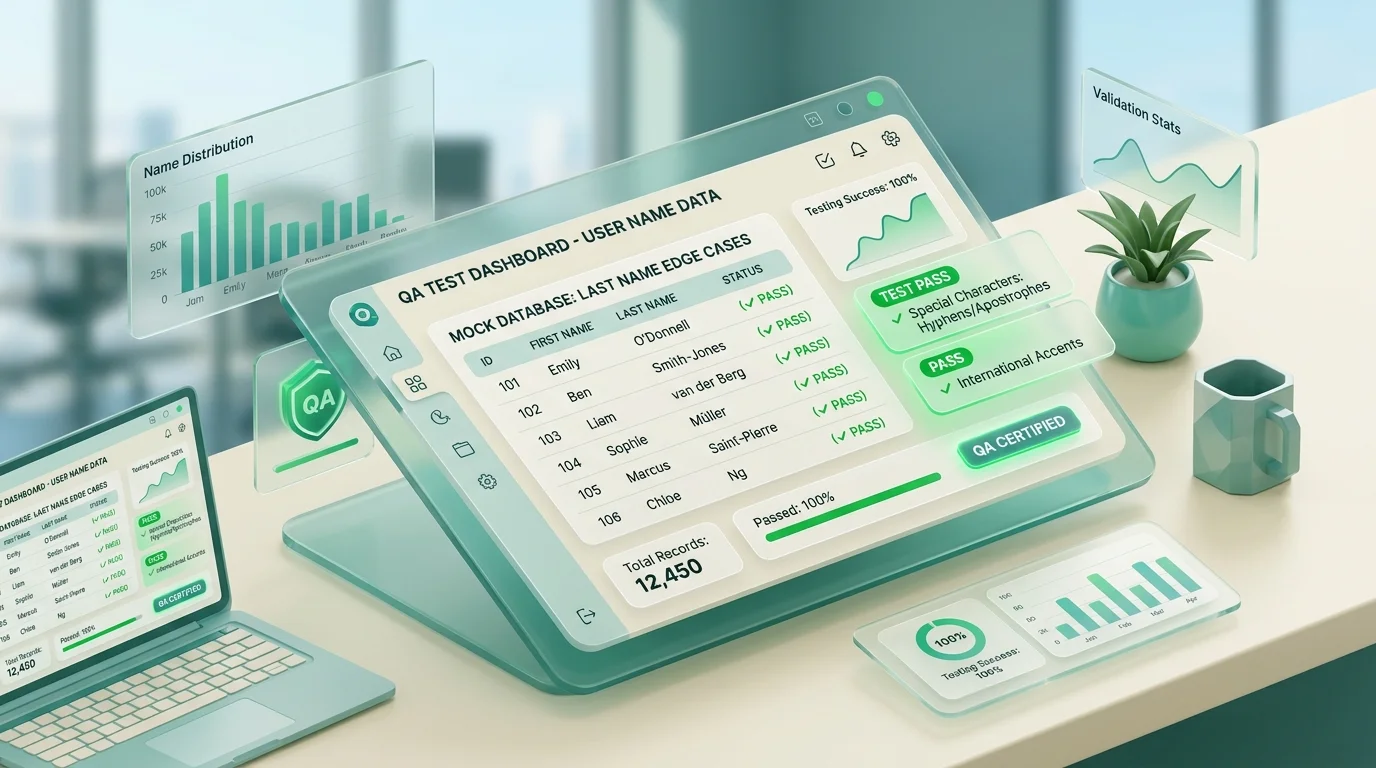
Software teams need names too, just not real ones. Realistic test names help developers check how systems handle everyday data without risking actual personal information. This guide covers synthetic test data best practices for surnames specifically.
Why Synthetic Last Names Matter in Software Testing
Using real names in test data risks privacy violations and legal complications. Synthetic identities solve this problem by providing realistic-looking data that behaves like real names without belonging to actual people.
This protects both companies and individuals. QA test data built entirely from fictional names avoids the ethical and legal risks tied to storing real personal information in non-production environments.
What Makes Test Surnames Realistic but Non-Identifying?
Good test surnames mimic real naming patterns closely enough to catch genuine bugs, while remaining clearly fictional. This balance ensures your testing accurately reflects real-world usage without exposing anyone’s actual identity.
Avoid surnames tied to real, identifiable individuals, especially uncommon ones. Non-production data should feel statistically realistic in structure, length, and spelling, without ever risking a genuine privacy concern.
Creating Fictional Names for QA Environments
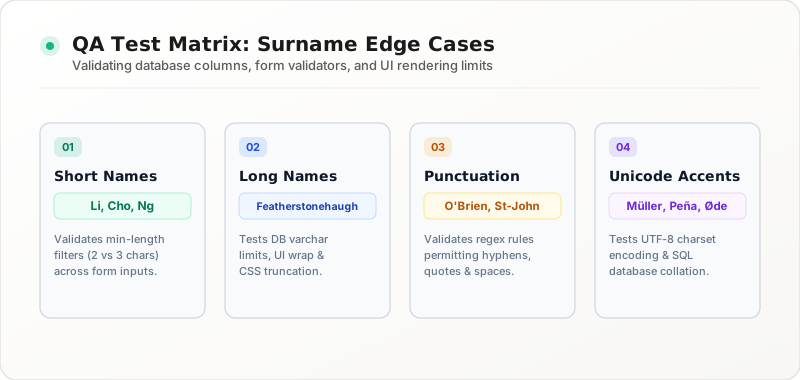
Fictional surnames used in QA should still cover diverse formats: short names, long names, hyphenated names, and names with special characters. This variety ensures your database testing catches edge cases early.
| Test Category | Example Surname Type |
|---|---|
| Short names | Li, Cho |
| Long names | Featherstonehaugh |
| Hyphenated names | Smith-Jones |
| Special characters | O’Brien, Müller |
How to Generate Large Sets of Unique Test Surnames
Automated test data generation tools can produce thousands of unique test names quickly. Scripts combining syllable lists or drawing from public domain name lists work well for bulk generation needs.
Consistency matters here too. Your surname test cases should remain reproducible across test runs, meaning the same input produces the same dataset every time your testing suite runs again.
Avoiding Real Personal Information in Test Databases
Never copy real customer data into a test database, even with good intentions. This practice violates most data privacy regulations and creates unnecessary legal risk for your entire organization.
Always confirm your anonymized test data contains zero traceable connections to real individuals. This includes checking that combinations of fictional first and last names don’t accidentally match real, identifiable people.
Testing Forms With Short, Long, and Complex Surnames
Form testing should include surnames of varying length to catch character limit bugs. A form that breaks on a fifteen-letter surname reveals a real problem your users will eventually encounter.
Testing both extremes matters equally. Single-letter surnames and unusually long ones both reveal different input validation weaknesses that mid-length names typically won’t expose during standard testing.
Testing Hyphens, Apostrophes, Spaces, and Special Characters
Unicode testing should specifically include hyphenated surnames, apostrophes like O’Brien, and accented letters like Müller. These characters commonly break poorly built surname validation systems in production environments.
Skipping this step is one of the most common QA testing mistakes. Real users have real names containing these characters, so your system absolutely must handle them correctly before launch.
How Duplicate Surnames Can Affect Database Testing
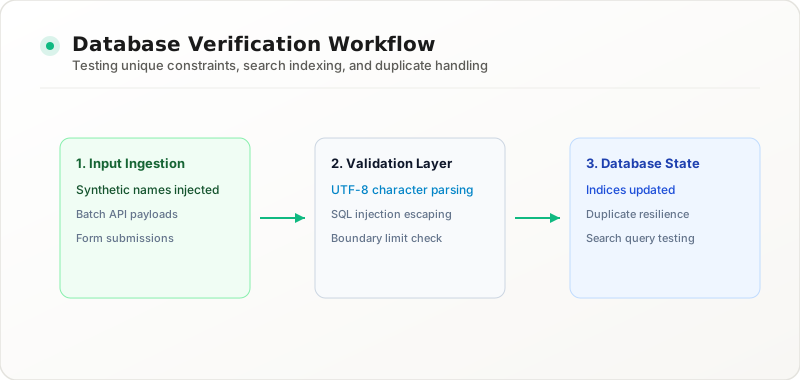
Duplicate entries can expose unique constraints issues within your database structure. Testing with intentionally repeated test surnames helps confirm your system handles duplicate records the way it’s actually supposed to.
This step catches bugs related to search functionality, sorting, and record matching, all of which behave differently once multiple users share an identical or very similar surname.
Building Repeatable Synthetic Name Test Cases
Test scenarios should be documented and reusable across your entire QA team. Storing a standard list of synthetic datasets ensures consistency between different testers working on the same application over time.
This repeatability saves time long-term. New team members can reuse existing test data generator outputs instead of creating fresh fictional names from scratch every single time they run a new test cycle.
Conclusion: Safer and More Useful Surname Test Data
Well-built synthetic test data protects privacy while still catching real software bugs. Thoughtful, varied realistic test names covering multiple formats and edge cases make your QA testing process both safer and significantly more effective.