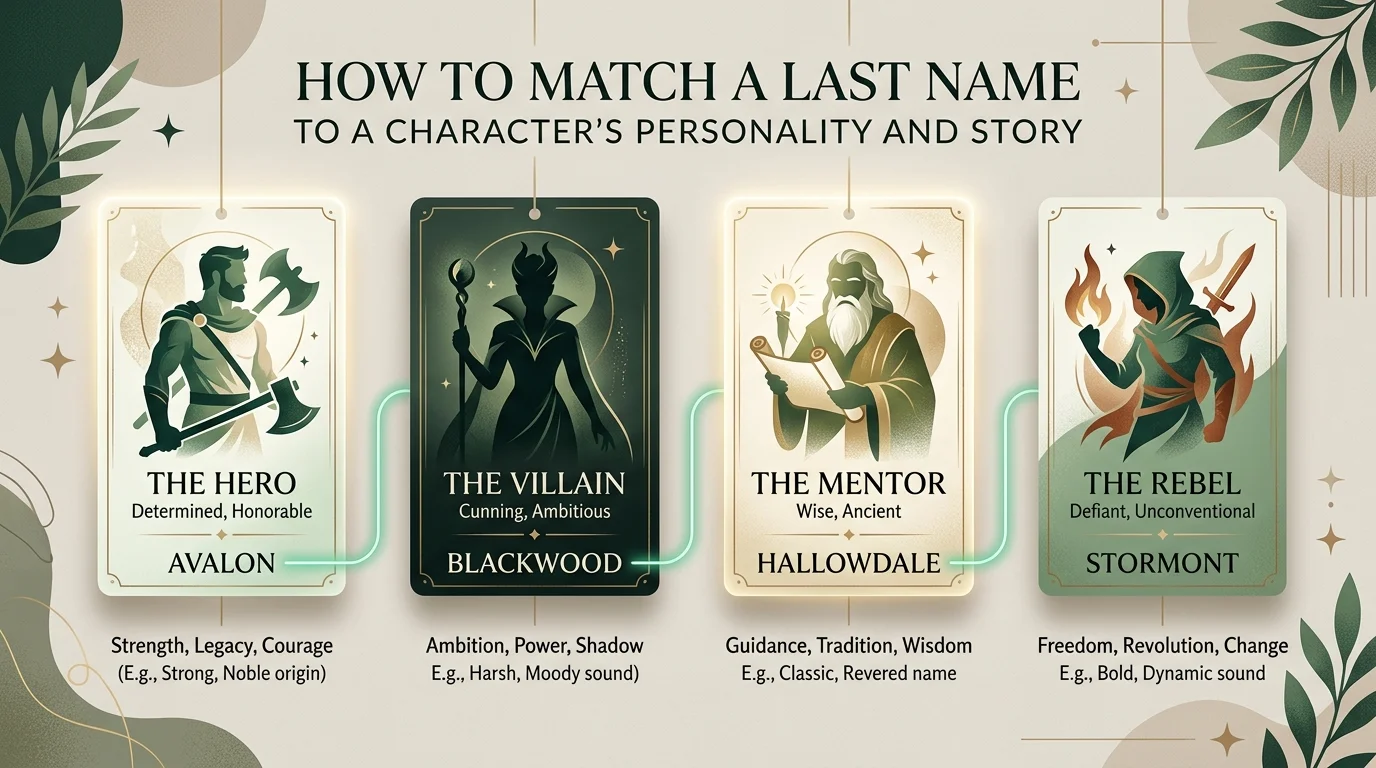
A surname can say more about a character than an entire paragraph of description. This guide explains how to match a last name to a character, using sound, history, and tone to reinforce character identity naturally.
How a Surname Can Reinforce Character Identity
Character identity isn’t built through backstory alone. A well-chosen surname reinforces who a character is every single time it appears, quietly shaping reader perception without requiring extra explanation.
This subtle tool works constantly in the background. Readers absorb tone from names instinctively, even if they never consciously notice why a particular surname feels fitting for that specific character.
Choosing Strong Surnames for Powerful Characters
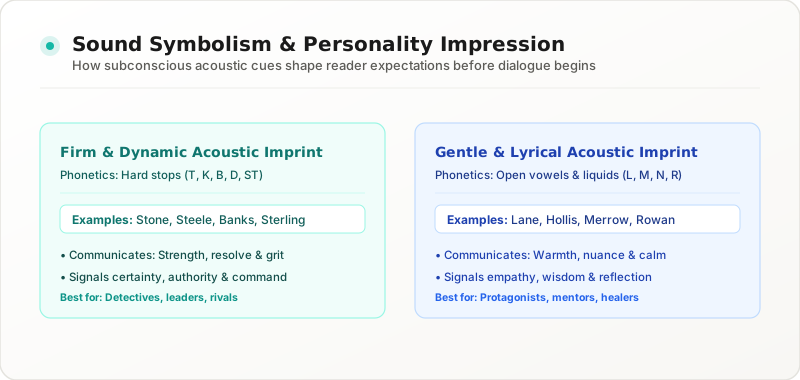
Strong surnames often feature hard consonant sounds, like Stone, Steele, or Banks. These names feel grounded and forceful, making them natural fits for leaders, warriors, or determined protagonist names.
Sound shapes perception more than people realize. A single strong syllable can instantly communicate confidence before a reader learns anything else about that character’s actual personality or backstory.
Soft-Sounding Surnames for Gentle or Reserved Characters
Soft surnames lean on flowing vowel sounds, like Lane, Hollis, or Merrow. These names suit gentle, quiet, or introspective characters whose personality doesn’t call for a harsh or aggressive-sounding name.
This contrast helps readers immediately sense personality differences between characters, even before any dialogue or action reveals those traits directly through the unfolding story itself.
Matching Surnames to Character Arcs and Development
Character development sometimes calls for a surname that hints at transformation. A name suggesting rigidity might suit a character who eventually learns to soften, creating quiet irony readers appreciate upon reflection.
This technique works best subtly. Overly obvious symbolic surnames can feel heavy-handed, so aim for a light touch that rewards attentive readers without becoming distracting for everyone else.
How Genre Influences Character Surname Selection
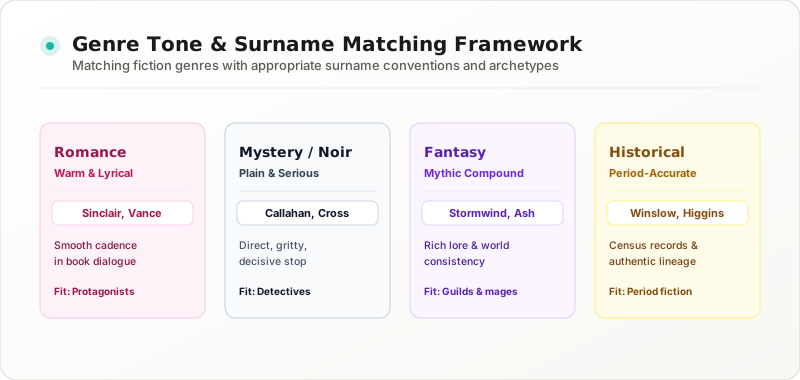
Genre naming conventions shape audience expectations. Romance character names often sound warm and approachable, while mystery character names lean toward plainer, slightly more serious-sounding options throughout the story.
| Genre | Surname Tone |
|---|---|
| Romance | Warm, approachable |
| Mystery | Plain, serious |
| Fantasy | Mythic, distinctive |
| Historical | Period-accurate |
Using Name Sound to Create a Specific Emotional Impression
Sound symbolism influences how readers emotionally respond to a name before understanding its meaning. Harder sounds feel more intense, while softer sounds feel calmer, an effect writers can use quite deliberately.
This isn’t guesswork. Linguists have studied how certain sounds consistently trigger similar emotional associations across different languages, giving writers a genuinely useful naming tool grounded in real research.
Matching Family Names With Character History
A character’s family background should align with their surname’s cultural or historical origin. Mismatches can confuse readers or accidentally undermine the careful backstory you’ve built for that character.
Researching surname history relevant to your character’s background strengthens overall consistency. This small detail adds believability that attentive readers genuinely notice and appreciate throughout your story.
How Social Setting Can Influence a Character’s Surname
Story setting affects surname expectations too. A working-class character in a specific historical period likely carries a different surname style than an aristocratic character from that exact same era and location.
This detail reinforces character backstory without extra exposition. Readers pick up social context quickly from naming patterns alone, especially in stories set within clearly defined historical or cultural settings.
When a Contrasting Surname Creates a Stronger Character
Sometimes a deliberately contrasting surname creates interesting tension. A gentle character with an unexpectedly harsh surname can hint at hidden depth, family conflict, or a surprising twist revealed later in the story.
This technique works best intentionally, not accidentally. Used carefully, contrast becomes a storytelling tool rather than simply a naming inconsistency readers might otherwise find confusing or distracting.
Conclusion: Making the Surname Part of the Story
A thoughtfully chosen surname does far more than label a character. By considering sound, history, and genre, writers can turn character surnames into a quiet but powerful storytelling tool that strengthens identity and depth throughout the entire narrative.