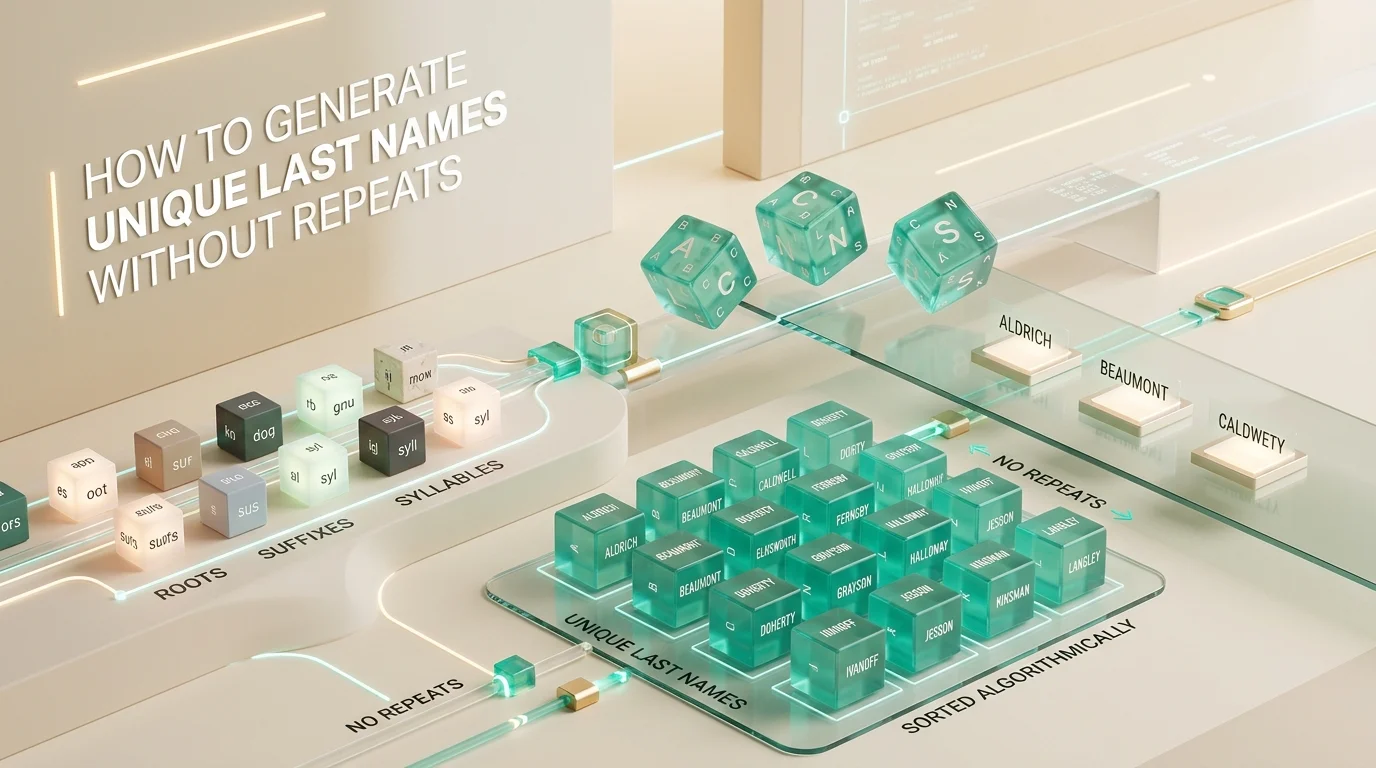
Nothing frustrates a writer faster than a generator repeating the same unique last names over and over. This guide explains how to generate unique last names consistently, whether you’re building a tool or just naming dozens of characters by hand.
Why Duplicate Surnames Appear in Random Generators
Most duplicate names happen because a generator’s database is too small for how often it’s being used. Without proper tracking, the same limited pool gets reused repeatedly, creating obvious, frustrating repetition.
This problem grows worse the more names you need. A generator fine for five results might completely fail once you need fifty unique fictional surnames for a large cast of characters.
How to Track Previously Generated Last Names
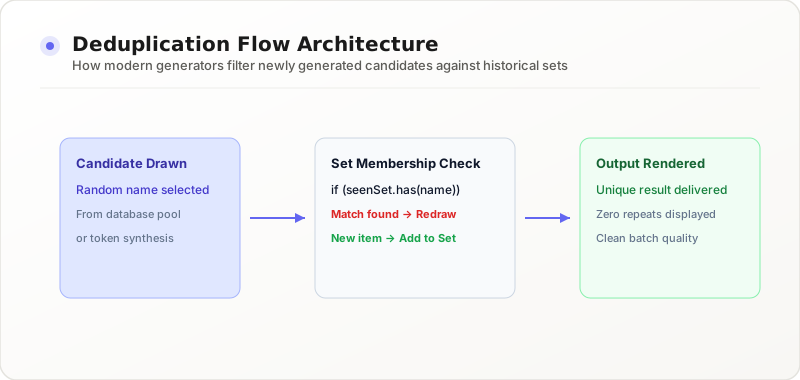
Keeping a running list of already-used surnames prevents accidental repeats. This simple duplicate detection habit works whether you’re using a digital tool or manually brainstorming names for your own writing project.
A basic spreadsheet works fine for smaller projects. Larger projects, like an entire fantasy series, benefit from more structured name uniqueness tracking systems built specifically for that purpose.
Using Lists and Sets to Prevent Duplicate Results
Developers building generators typically use programming structures like sets, which automatically reject duplicate entries. This ensures every generated surname is checked against previous results before being shown to the user.
| Method | How It Prevents Duplicates |
|---|---|
| Sets | Automatically rejects repeated entries |
| Tracking lists | Manually checked against new results |
| Database flags | Marks names as already used |
How Randomization Affects Surname Variety
Pure randomization without tracking guarantees eventual repeats, especially with a small underlying list. Larger, well-organized databases combined with proper tracking dramatically reduce how often duplicates actually appear.
This is why bigger isn’t always better on its own. A massive list without deduplication logic can still frustrate users just as easily as a tiny list would.
Generating Unique Names From Multiple Word Components
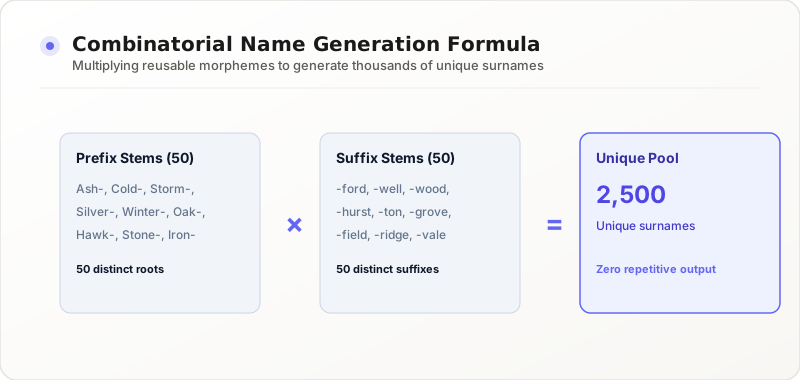
Combining separate syllables or word fragments multiplies your possible name combinations significantly. Instead of pulling from one fixed list, this method builds fresh surnames from smaller, reusable building blocks.
This technique practically eliminates repetition. Even a modest set of fifty prefixes and fifty suffixes creates thousands of possible surname components combinations without ever repeating the exact same result twice.
How to Check Names Against an Existing Dataset
Cross-referencing new results against your surname database confirms nothing has already been used. This step matters most for large projects where tracking manually becomes genuinely impractical after a certain point.
Automated tools handle this instantly. Manual writers can keep a simple document open beside their generator, checking each new name before adding it to their growing character list.
Balancing Uniqueness With Natural-Looking Surnames
Forcing uniqueness too aggressively can produce strange, unnatural-sounding results. The goal is variety within reason, not surnames so unusual they pull readers out of the story entirely.
Natural-looking surnames should still follow believable sound patterns, even while avoiding repetition. Balance matters more than raw uniqueness alone when building a truly usable naming system.
How Many Unique Surnames Can a Generator Produce?
This depends entirely on the underlying database size and combination method. Component-based generators can theoretically produce thousands of combinations, while static list-based tools remain limited to their original, fixed entry count.
For most writers, a well-built generator producing a few hundred unique options covers even large, multi-book series without any noticeable repetition problems arising.
Preventing Repetition During Large-Scale Name Generation
Large projects, like naming an entire fictional town, benefit from structured batch generation with built-in duplicate checking. This prevents the tedious, error-prone process of manually verifying dozens of names individually.
Bulk generation tools save enormous time here. Batch processing with automatic deduplication is far more efficient than generating and checking names one at a time by hand.
Conclusion: Building a More Diverse Surname Generator
Preventing duplicate surnames comes down to tracking, smart combination methods, and balancing variety with realism. Whether building a tool or naming characters manually, these techniques keep your unique surname generator results fresh and genuinely useful.