
Surname origins tell a story that most people never stop to read. Every family name carries a piece of history, whether it points to a job, a place, or a parent’s name. This guide walks through how last name history works across different regions, so you can understand surname meanings without guessing.
Why Surname Origins Matter When Researching Family Names
Understanding family name origins helps you connect with your own roots or write more accurate characters. A surname isn’t random text, it’s a record left behind by earlier generations. Knowing this surname etymology gives weight to something people usually take for granted.
Many families lost track of their name’s original meaning over time. Spelling changed, borders shifted, and languages blended together. Digging into surname culture restores context that would otherwise disappear completely from family memory.
How Last Names Developed Across Different Cultures
Family names by country didn’t all appear at the same time in history. Some regions adopted hereditary surnames centuries before others, often driven by taxation or record-keeping needs. Government census systems pushed many countries toward fixed naming traditions we still use today.
Different cultural naming systems grew from different needs. Some societies built names around family lineage, while others focused on location or trade. This variety is why surname traditions look so different depending on where your family originated.
Patronymic and Matronymic Surnames Explained
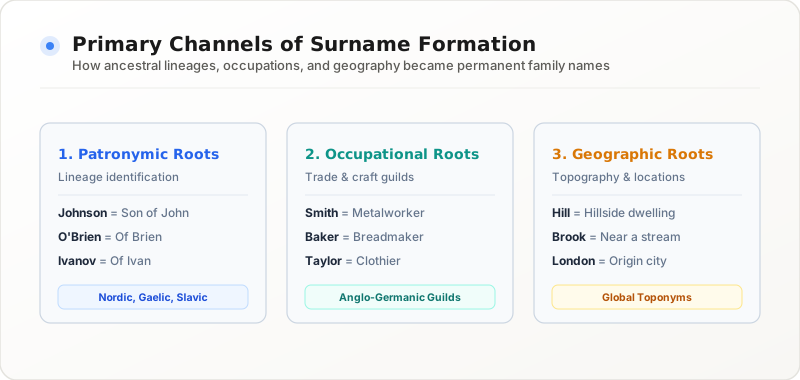
Patronymic surnames come from a father’s first name, like Johnson meaning “son of John.” Matronymic surnames work the same way but trace back to a mother’s name instead, which was less common but still present in several cultures.
These naming patterns tell you something real about family structure centuries ago. A name ending in “-sen,” “-vich,” or “-dottir” usually signals this kind of origin. Recognizing this pattern is one of the easiest ways to start surname research on your own.
Occupational Surnames and Their Historical Origins
Occupational surnames came directly from a person’s job. Names like Baker, Mason, and Smith weren’t creative choices, they described exactly what someone did for a living. This is one of the clearest types of surname meaning you’ll find in any surname etymology study.
| Surname | Original Occupation |
|---|---|
| Smith | Metalworker |
| Baker | Bread maker |
| Carpenter | Woodworker |
| Fisher | Fisherman |
| Taylor | Clothing maker |
Geographic Surnames and Place-Based Family Names
Geographic surnames describe where a family once lived, worked, or came from. A name like Hill, Brook, or London points directly to a physical location. These place-based family names were common in eras when few families traveled far from home.
This naming style makes geography part of family heritage in a literal sense. Some regional surnames even describe a specific landmark, like a river bend or a hilltop. That detail can survive for hundreds of years without anyone realizing where it came from.
How Language Changes the Spelling of Surnames
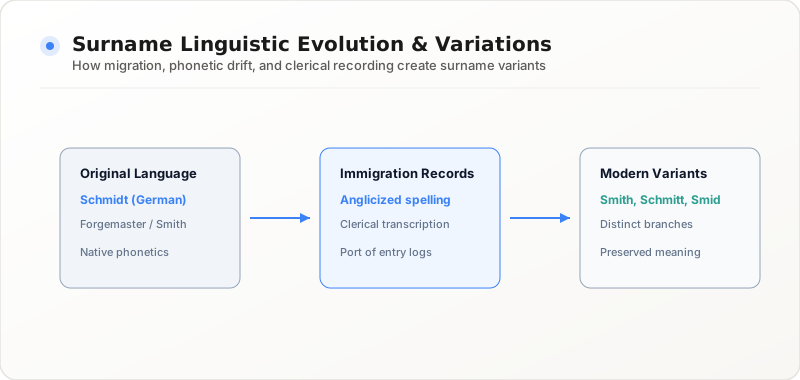
Surname spelling rarely stays fixed forever. Immigration, translation, and simple clerical errors reshaped thousands of family names throughout history. A surname crossing from one country to another often picked up new surname variants along the way.
This explains why two people with a shared ancestor can spell their last name completely differently today. Surname linguistics shows how sound often survives even when spelling doesn’t. Small shifts in pronunciation eventually created entirely separate branches of the same original name.
Understanding Meaning Without Assuming Cultural Identity
A surname’s origin doesn’t guarantee someone’s current cultural identity. Families move, marry across cultures, and adopt new names for many reasons. Treating cultural surnames as a fixed identity marker oversimplifies a much more complicated history.
This matters for writers and researchers alike. Respecting surname traditions means acknowledging their complexity, not assuming a name always tells the full story. A thoughtful approach avoids stereotypes while still appreciating real surname history.
How to Research the Historical Origin of a Last Name
Start with genealogy surnames databases, historical census records, and family origin websites. These sources compare surname variations across decades and regions, giving you a clearer picture of where a name actually began.
Old church records, immigration logs, and land ownership documents are also valuable resources. Cross-referencing multiple sources strengthens your surname research and helps confirm whether a meaning is well documented or simply a popular guess passed down without proof.
Why One Surname Can Have Multiple Origins or Meanings
Many surnames formed independently in different regions at different times. A name might be an occupational surname in one country and a geographic surname in another, with no connection between the two versions at all.
This is why surname meaning databases often list multiple possible origins for a single name. Instead of one clean answer, surname etymology research frequently reveals several separate, equally valid stories behind the very same spelling.
Conclusion: Understanding Surnames Through History and Language
Every surname carries a layered history shaped by language, migration, and daily life. Whether it comes from a job, a place, or a parent’s name, traditional surnames connect the present to a much older story. Taking time to research surname origins turns a simple family name into something genuinely meaningful.